

Last Updated on: 21 Jun 2026
Tata Curvv EV
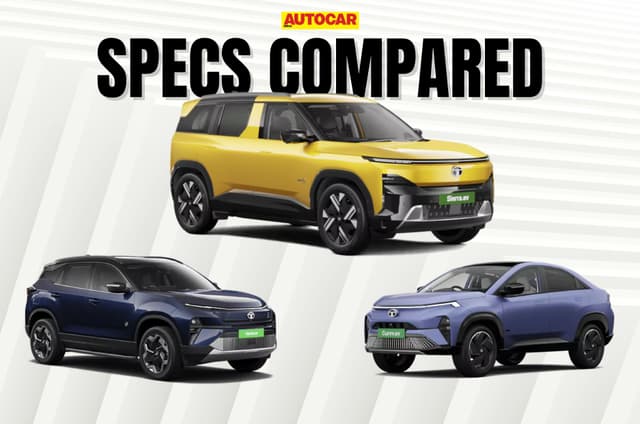
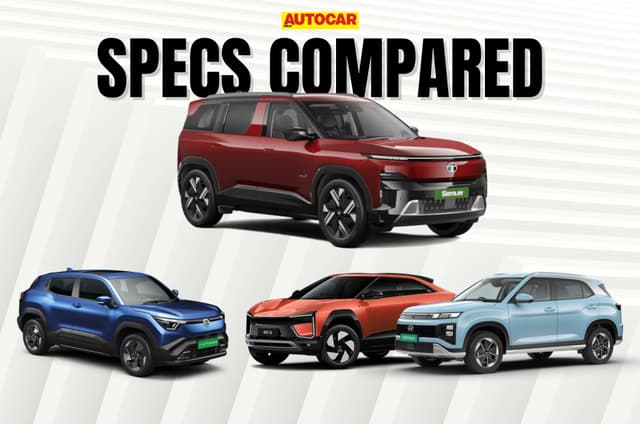
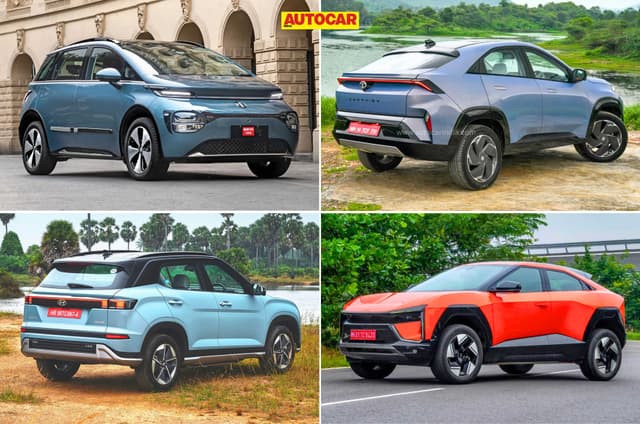
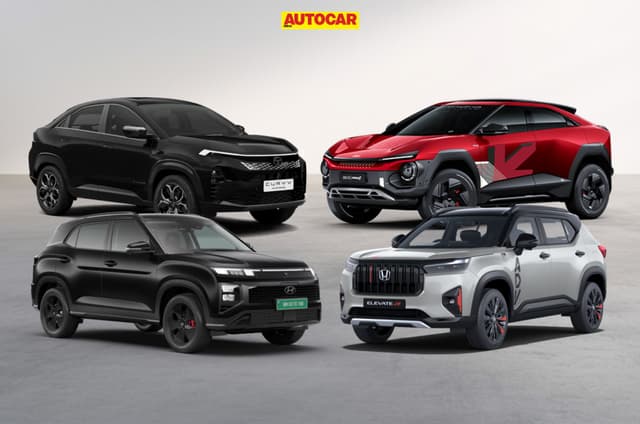
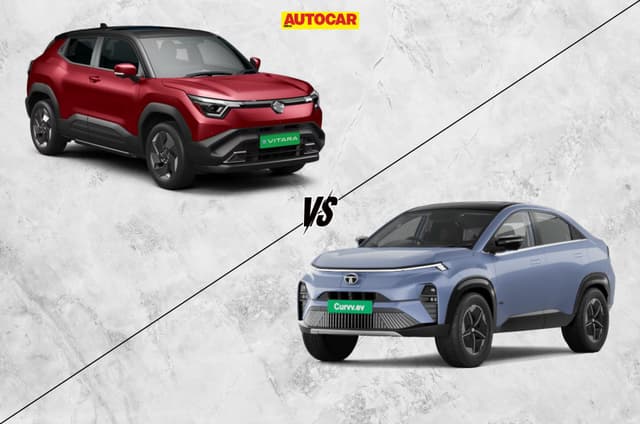
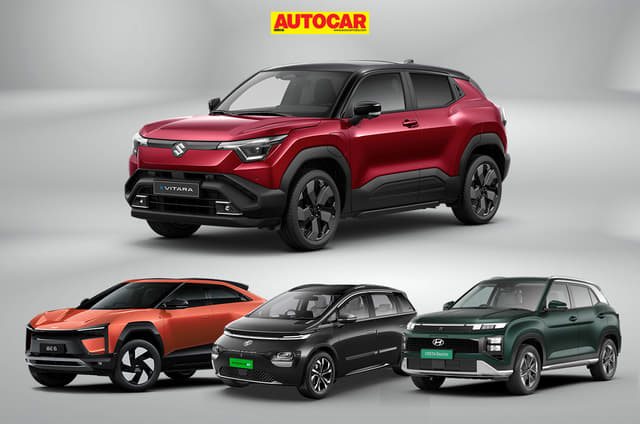
The Tata Curvv EV price in India starts at Rs 16.99 lakh (ex-showroom). At this price point, the Curvv EV rivals the Hyundai Creta Electric, Mahindra BE 6, Vinfast VF6, and MG ZS EV in the electric midsize SUV segment.
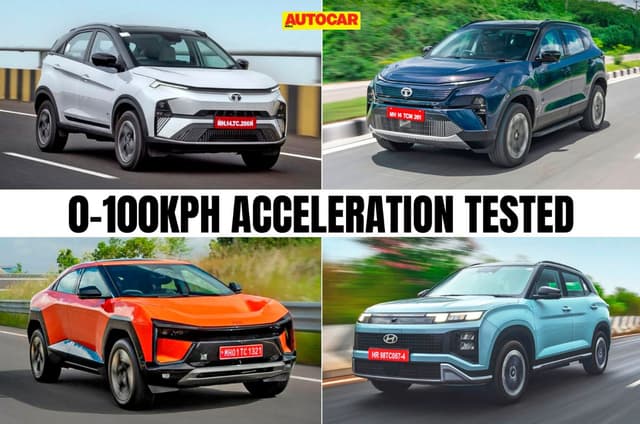
The Curvv EV battery capacity is 55kWh. Tata Curvv EV range is claimed at up to 502 km (ARAI), with a real-world figure of around 365 km. It has a single-motor FWD powertrain that makes 167 hp and 215 Nm. The Tata Curvv EV 0-100kph time is 11.15 seconds as per real-world testing.
Inside, the Tata Curvv EV offers features like a panoramic sunroof, a floating 12.3-inch infotainment touchscreen with wireless Android Auto and Apple CarPlay, a 10.25-inch digital driver display, ambient lighting, ventilated front seats, connected car tech, and quality upholstery. Practicality is also good, with the Curvv EV boot space rated at 500 litres along with an 11.6-litre frunk.
Tata Curvv EV Highlights
- The Tata Curvv EV safety rating is 5 stars as per Bharat NCAP. Its safety features include Level 2 ADAS, 6 airbags, electronic parking brake with auto hold function, hill start assist, ESP, traction control, ABS with EBD, a blind spot monitor, and more.
- In terms of charging, the Curvv EV battery state goes from 10-80 percent in 40 minutes using a 70kW DC charger.
- The Tata Curvv EV ground clearance measures at 186-190mm, ample for Indian roads.
- The Tata Curvv EV launch date was August 7, 2024.
- Dimensions of the Curvv EV stand at 4310 mm in length, 1810 mm in width, 1637 mm in height, with a wheelbase of 2560 mm.
Tata Curvv EV Latest Updates
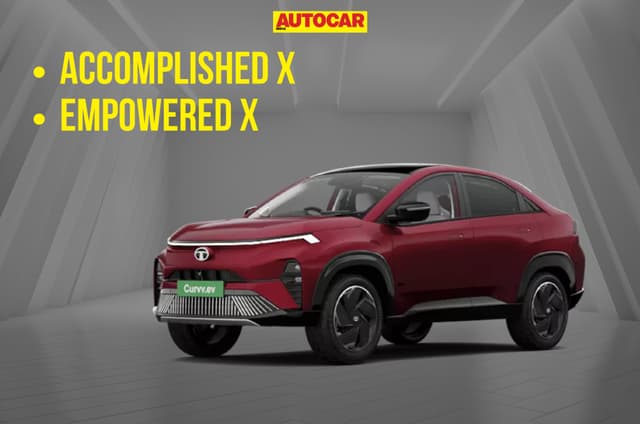
4 May 2026: Tata Curvv EV SeriesX launched at Rs 16.99 lakh; Accomplished X and Empowered X variants, part of the SeriesX range, get a 55kWh pack.
5 March 2026: MY24 Tata Curvv EV models get up to Rs 1.71 lakh benefits.
Tata Curvv EV Features and specifications
Our Rating | 7 |
Battery Range | 502 km |
Fuel Type | Electric |
Seats | 5 |
Body Style | SUV |
Doors | 5 |
Claimed Electric Motor Range | 502 km |
| Motor Type | Permanent Magnet Synchronous Motor |
| Max Motor Torque | 215 Nm |
| Number of Motors | 1 |
| Pure Electric Driving Mode |
| Real World Highway Range (EV) | None km |
| Terrain Modes | No |
| Real World City Range (EV) | None km |
| Battery Capacity | 55kWh |
| Rear Brakes | Disc |
| Front Brakes | Disc |
| Steering Adjust type | Manual |
| Steering Adjust | Tilt |
| Ground Clearance | 186 mm |
| Chassis Type | Monocoque |
| Width | 1810 mm |
| Boot Capacity | 500 litres |
| warranty Duration | 3 |
| warranty Distance | 125000 |
| Glove Box | |
| Front Seatback Pockets | |
| Foldable Seatback Table | |
| Flat Bottom Steering Wheel |
| Dual Tone Horn | |
| Traction Control | |
| Front Collision Avoidance | |
| Curtain Airbag |
| Sequential Turn Indicators | |
| Outside rear view mirror (ORVM) | |
| Front Fog Lamps | |
| ORVM turn indicators |
| Low Fuel Level Warning | |
| Instantaneous Consumption | |
| Head-up Display | |
| Gear Indicator |
| Satellite Navigation | On-board |
| Second Row USB port | Type C |
| Steering Audio Controls | |
| Steering Phone Controls |
| Over the air (OTA) updates | |
| Location Based Services | |
| Phone App | |
| Service Reminder Via App |
Tata Curvv EV price & variants
The Tata Curvv EV price in India starts at ₹16.99 lakh, (ex-showroom). Tata Curvv EV on road price will vary by city and charges like RTO, insurance, and other factors, but you can expect it to be in the ₹20.2-25.6 lakh range depending on the chosen variant.
In India, the Curvv EV is offered in 5 trim levels: Creative, Accomplished, Accomplished+ S, Empowered+, and Empowered+ A. The Curvv EV Creative and Empowered+ trims get only the 45kWh and 55kWh battery packs, respectively, while the Accomplished and Accomplished+ models are available with both battery options.
The Tata Curvv EV 55kWh Empowered X Dark features include a panoramic sunroof, powered and ventilated front seats, 12.3-inch floating infotainment touchscreen, 10.25-inch digital driver’s display, 360-degree camera, wireless charger, ambient lighting, connected car tech, 9-speaker JBL sound system, leatherette upholstery, and more.
Tata Curvv EV Official Brochure
Download the complete brochure with specs, features, and variants.
Tata Curvv EV expert review
We like
Feature-loaded cabin
Range and performance
We don't like
Some ergonomic issues
Rear seat under thigh support lacking
8.0
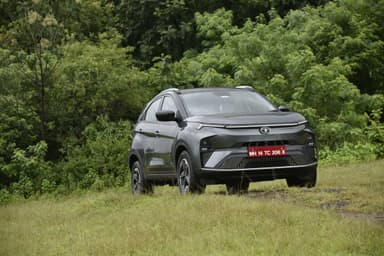
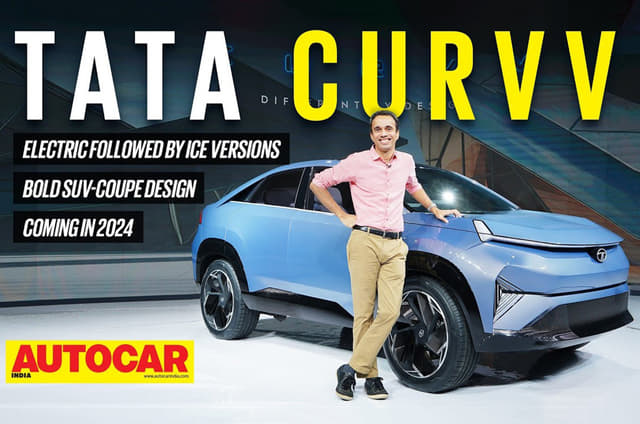
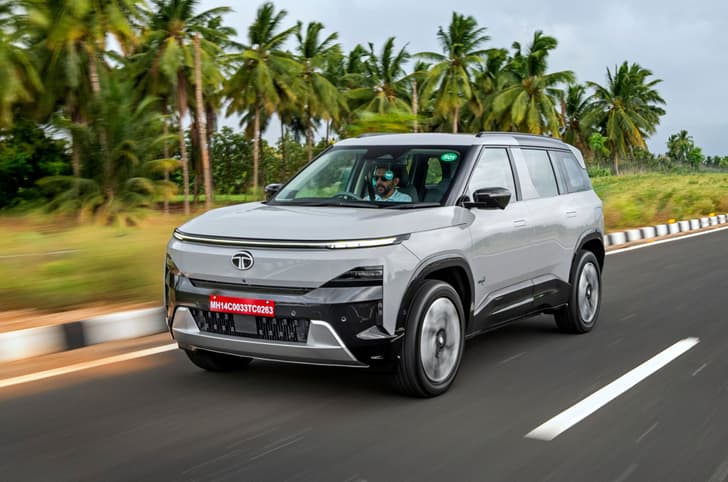
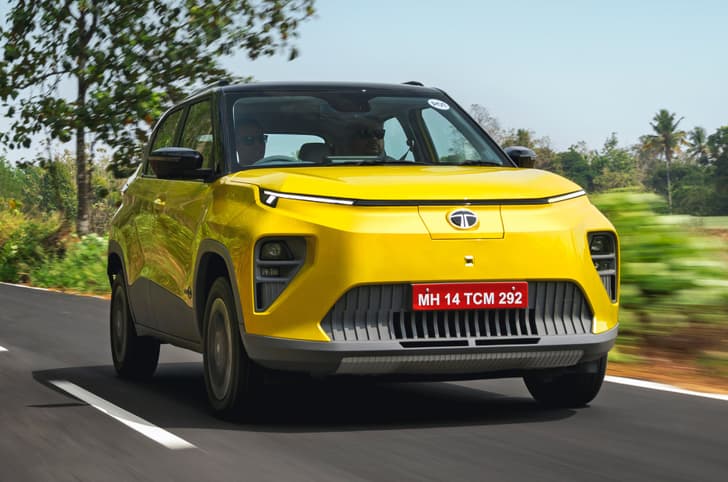
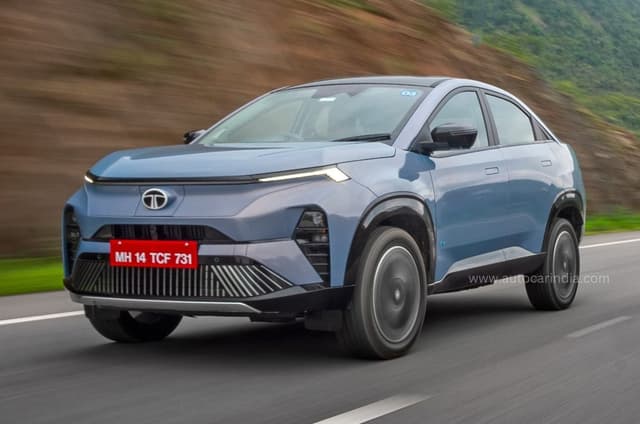
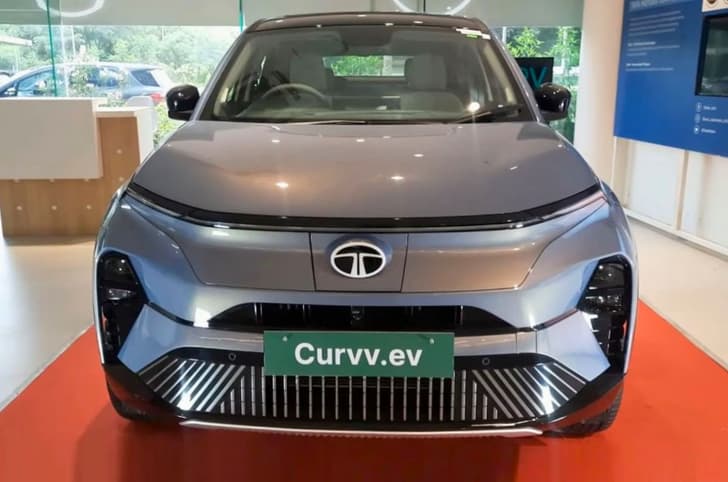
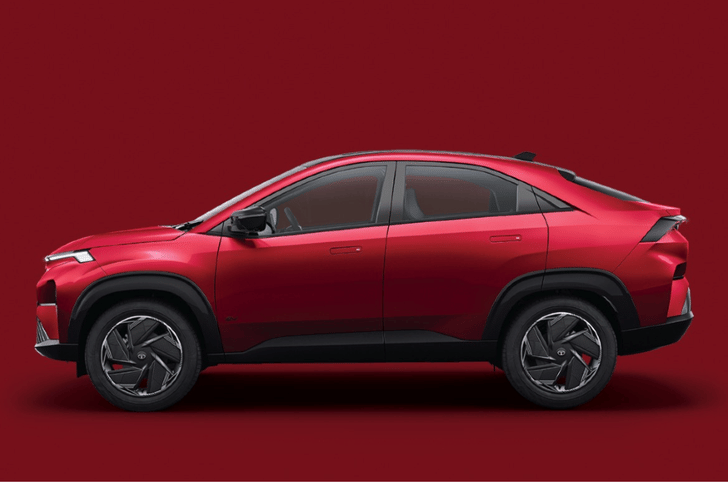
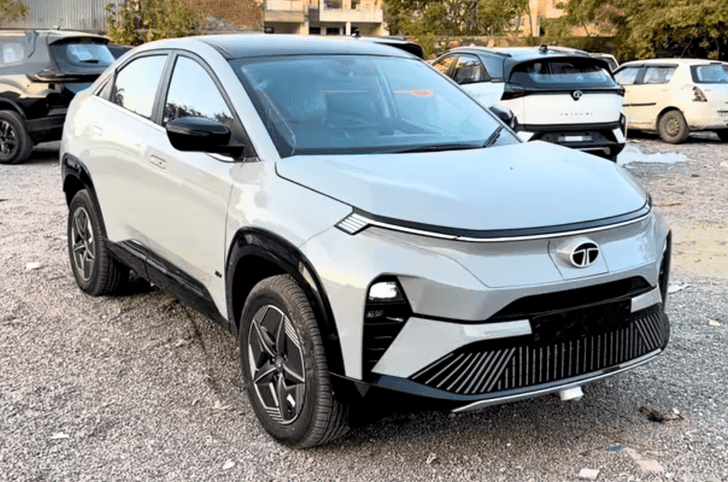
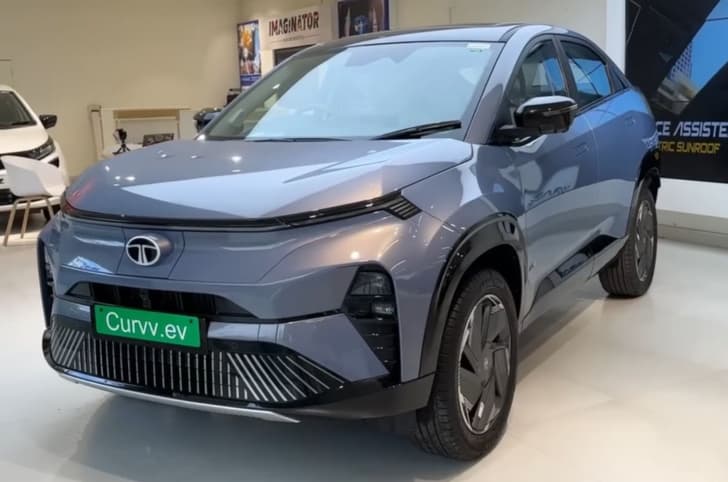
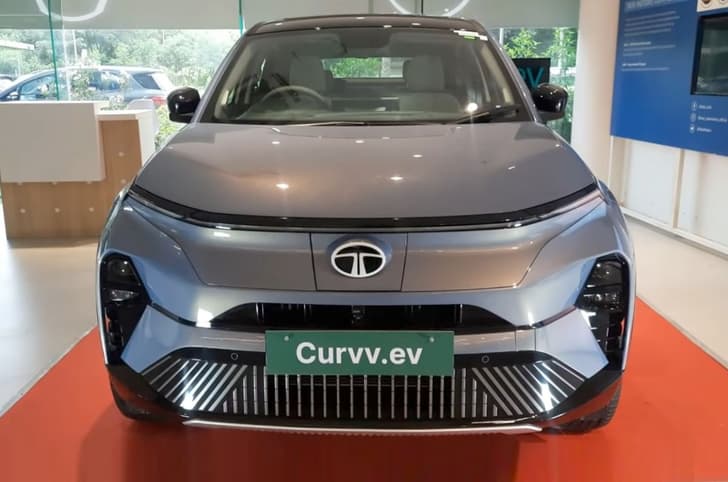
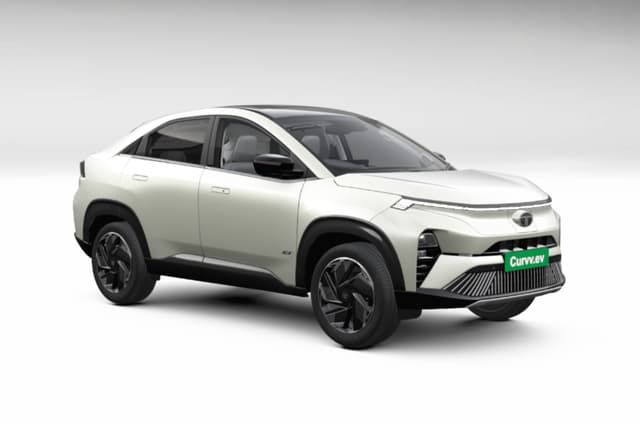
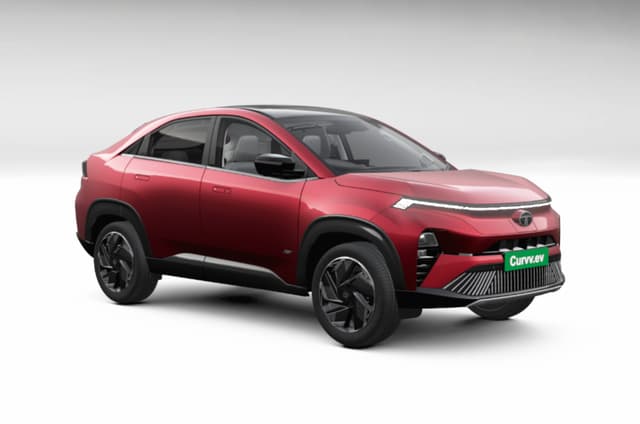
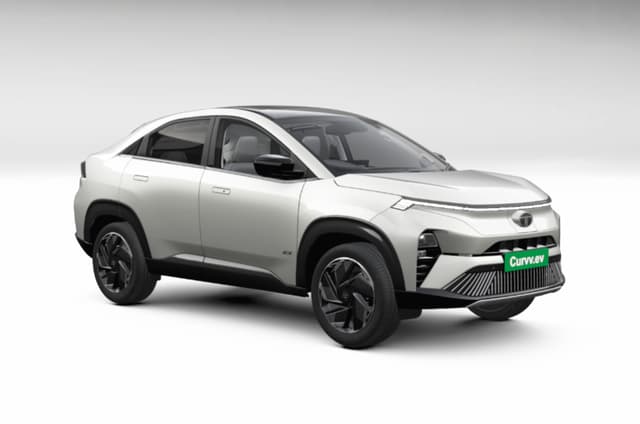
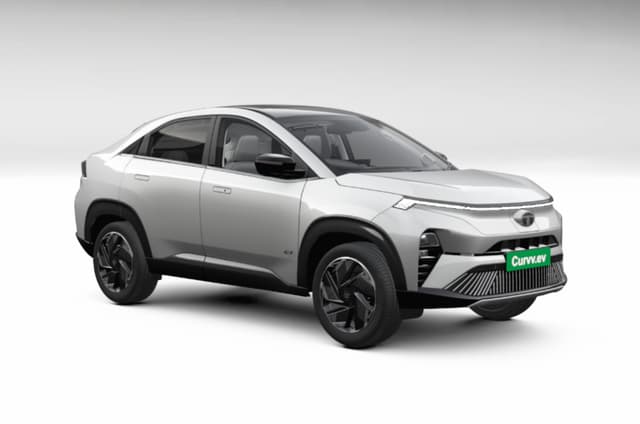
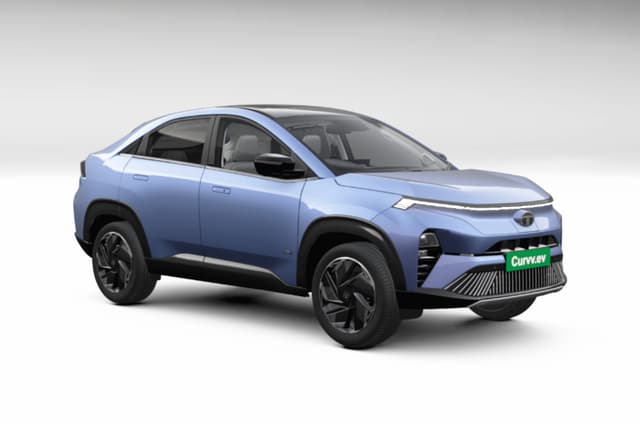
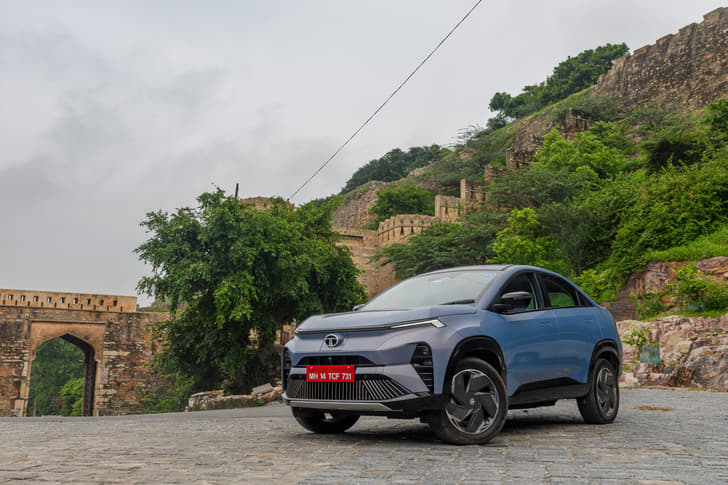
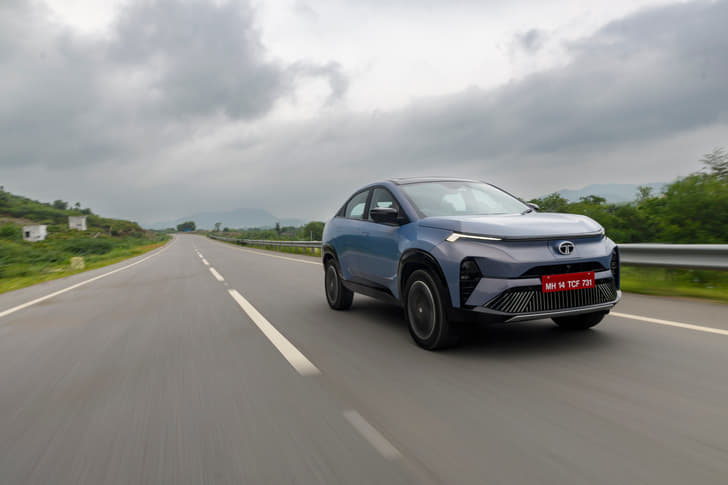
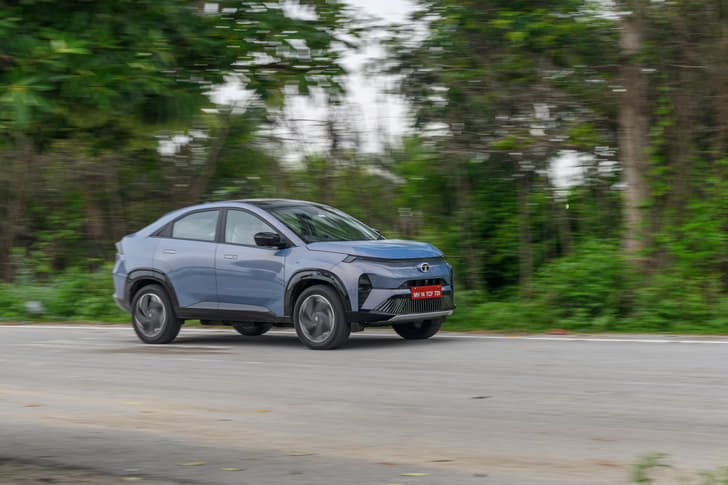
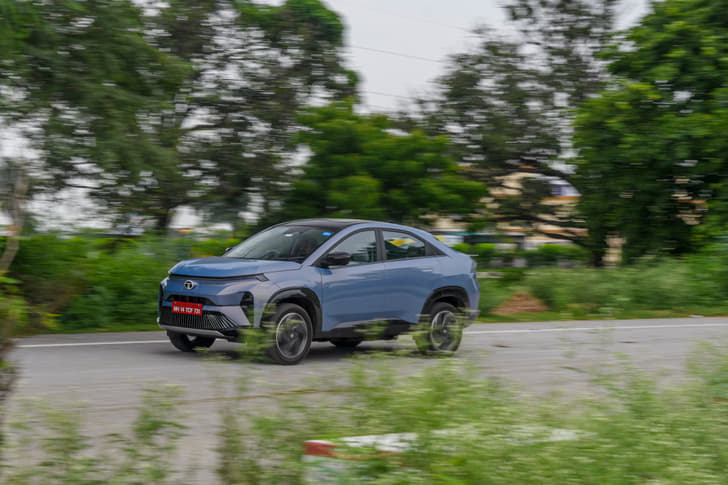
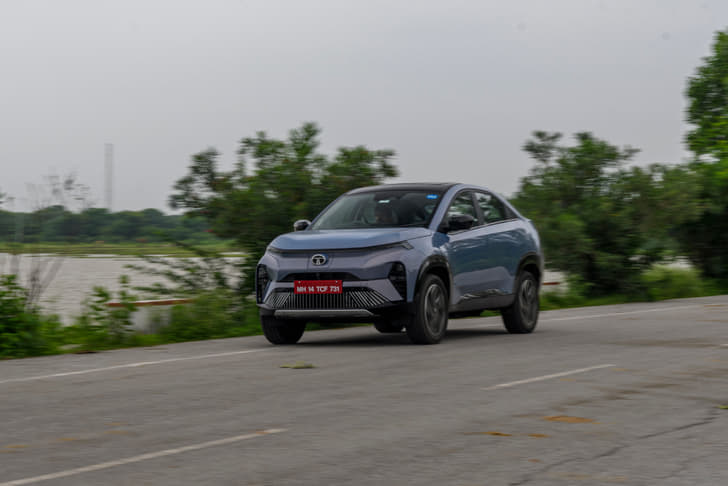
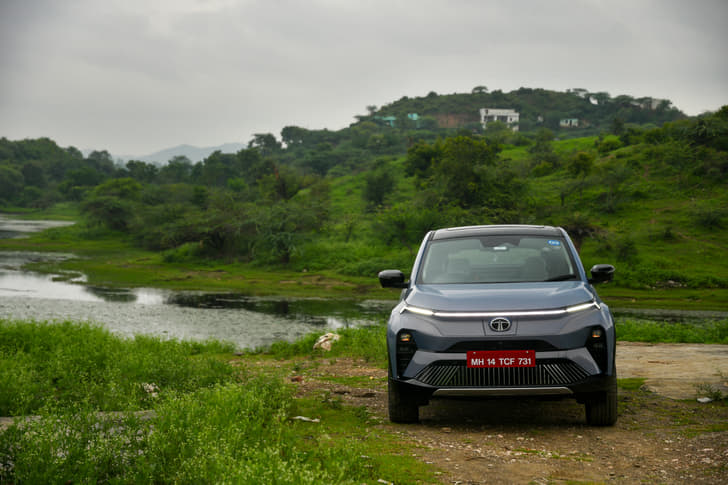
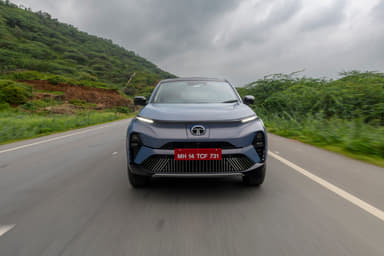
The Curvv EV carries over most of its concept car design elements. The familiar Tata front includes a thin LED light bar, closed-off grille (with charging port hidden behind the logo), and a sleek, chrome-trimmed airdam. Flush-fitting, illuminated door handles, a sloping coupe-like roofline, gloss black cladding, and 18-inch aero wheels enhance the stylish look. At the rear, there’s a full-width LED bar and a raked tailgate, though this hampers rear visibility and omits a washer/wiper. The Curvv EV comes in five paint options, with the “Virtual Sunrise” shade standing out. Tata also debuts a premium-looking new key fob.
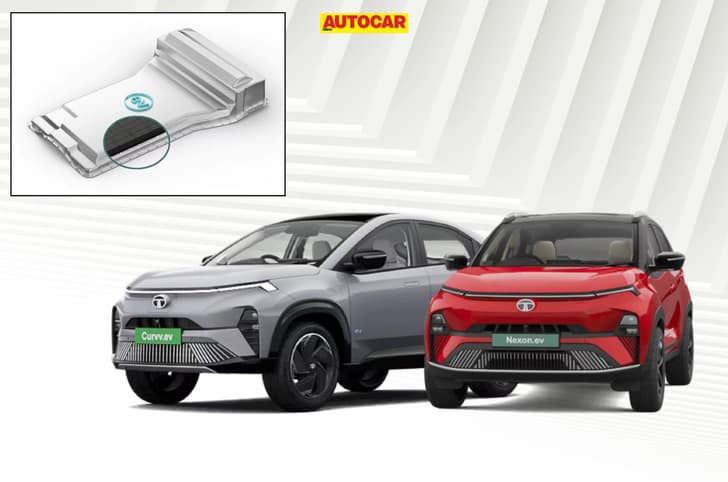
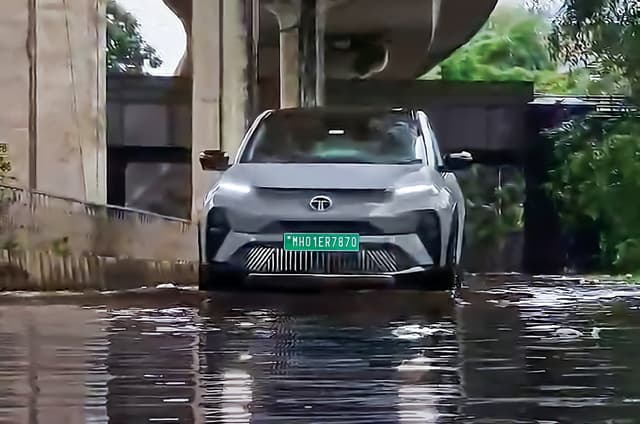
Dimensionally, it’s larger than the Nexon EV but slightly smaller than the MG ZS EV. It offers a 186mm ground clearance (190mm for the 45 variant), segment-best 18-inch wheels, 50:50 weight distribution, and 450mm water wading capacity. It’s built on Tata’s Acti.ev platform, which allows a 11.6-litre frunk and 500-litre boot, expandable via split-folding seats.
7.0
The cabin shares much with the Nexon EV – dual screens, gloss black HVAC panel – but gets a new 4-spoke steering wheel and a textured dash. Light grey and ivory tones brighten up the space, though they’re hard to maintain. Front seats offer excellent comfort, ventilation, and electric adjustment.
However, practicality takes a hit – poor cupholder placement, hard-to-reach USB/12V ports, and limited armrest storage. The thick steering wheel isn’t the nicest to hold and has a sharp edge on the horn pad.
Rear legroom improves thanks to a longer wheelbase than the Nexon, but headroom suffers due to the sloping roofline. The reclining backrest and scooped headliner help, but taller passengers may struggle. Under-thigh support is also limited. Rear occupants get vents, USB-C port, and armrest with cupholders.
7.0
The front-mounted motor puts out 167hp (55 variant) and 215Nm. There are three drive modes – Eco, City, and Sport – with Sport offering the sharpest throttle response and a higher top speed of 160kph. We clocked a 0-100kph time of 9.6sec, slightly slower than Tata’s 8.6sec claim.
Eco and City offer more restrained but usable performance, with our 0-100kph test in Eco mode coming in at 11.6sec. NVH levels are well controlled. Fast charging is now improved – 70kW DC support for a 10-80% top-up in 40 minutes. A 7.2kW AC charger takes 8 hours for a full charge. It also supports standard 15A wall sockets. Regen braking has four levels, with one-pedal driving enabled in the highest setting.
8.0
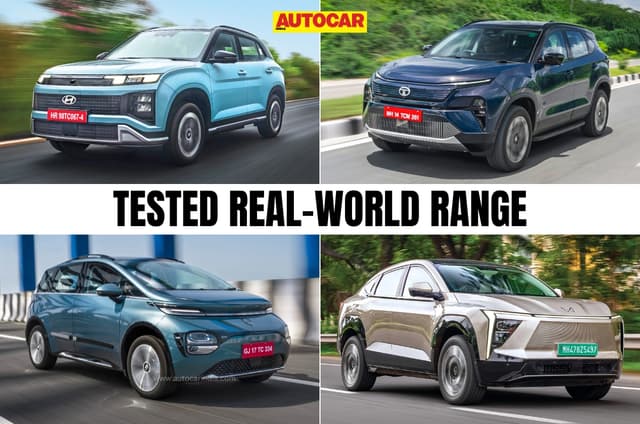
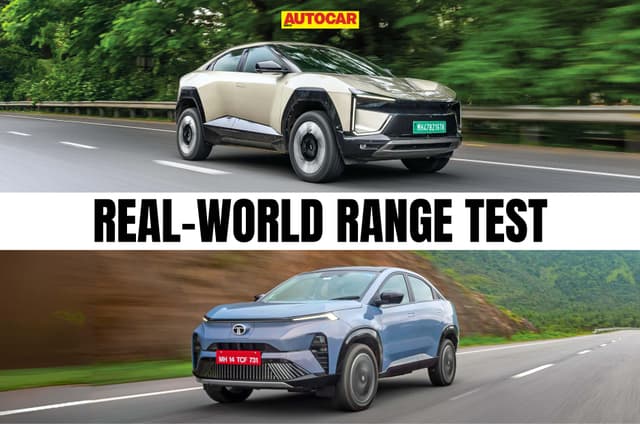
Tata claims 400-425km under the C75 cycle. In our real-world test, we kept the car in Eco mode with regen set to Level 2 (city) and Level 1 (highway). We achieved 6.64km/kWh combined efficiency, translating to a real-world range of 365km.
8.0
The Curvv rides firmly at low speeds but feels composed as you go faster. Suspension absorbs bumps well but is audible over sharp edges. Handling is tidy, body roll is controlled, and the steering – though slightly heavy – feels direct. Cabin insulation is also impressive.
9.0
The Curvv EV is loaded. The 12.3-inch infotainment screen (shared with Nexon EV) includes Tata’s arcade.ev suite for streaming and gaming apps. The 10.25-inch digital cluster is colourful but cluttered. A neat addition is the blind view monitor, which can display in either screen.
New features include a panoramic sunroof, ambient lighting, gesture-controlled electric tailgate, a pedestrian warning sound, and Level 2 ADAS – the lane-keep assist and adaptive cruise worked well during our drive. Other highlights: JBL 9-speaker audio, 360-degree camera, cooled wireless charging, leatherette upholstery, connected car tech, V2V and V2L capabilities.
Top trims get six airbags, ESP, front and rear parking sensors, hill-assist, hill-descent control, and all-wheel disc brakes. The Curvv EV also gets a 5-star Bharat NCAP safety rating.
7.0
Priced between Rs 17.49-22.24 lakh (ex-showroom), the Curvv EV offers a significant step up from the Nexon EV and still manages to undercut the MG ZS EV. It aligns with top-end petrol/diesel midsize SUVs and includes a solid warranty – 8 years/1,60,000km on battery and motor, and 3 years/1,25,000km on the vehicle.
Reviewed by: Soham Thakur
Tata Curvv EV reviews
Tata Curvv EV comparison
Tata Curvv EV Range
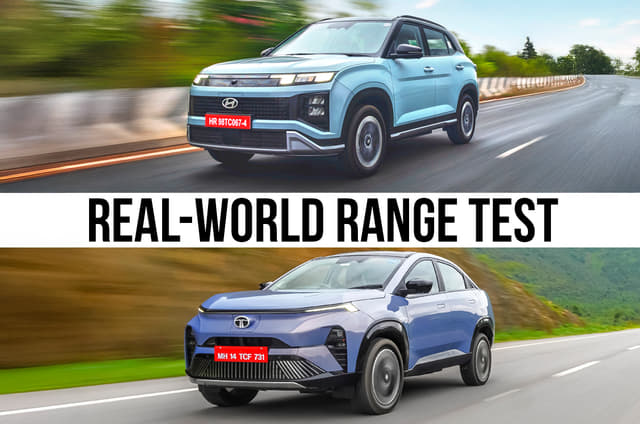
The Tata Curvv EV range is claimed at 502km, per ARAI testing. In our testing, the Curvv EV delivered a real-world range of 365km.
| PowertrainThe combination of engine type, fuel, and transmission that powers your vehicle and determines how it drives and what it runs on. | ARAI RangeMileage certified by the government, tested under controlled lab conditions. Real-world mileage will vary. | Autocar Tested RangeAutocar's experts test each vehicle on fixed city and highway routes under standardised conditions - single occupant, AC running, manufacturer-recommended tyre pressures. Tanks are filled to the brim before and after each run to calculate efficiency. Results reflect realistic real-world usage. |
|---|---|---|
Electric 55kWh | 502 km | 365.0 km |
Tata Curvv EV news
Tata Curvv EV Images
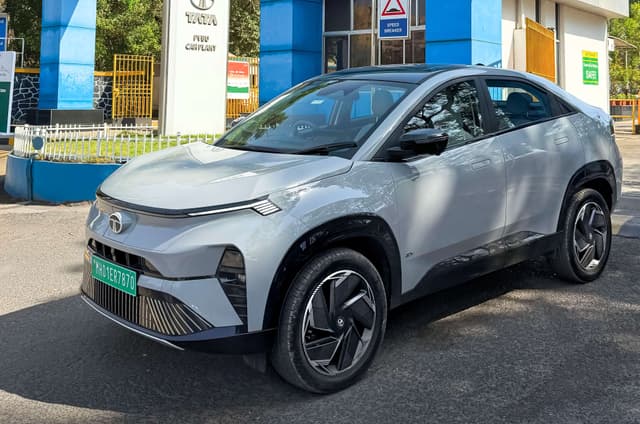
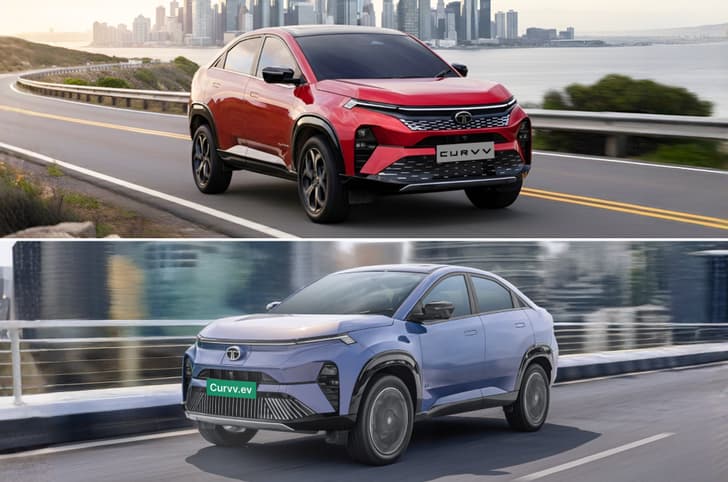
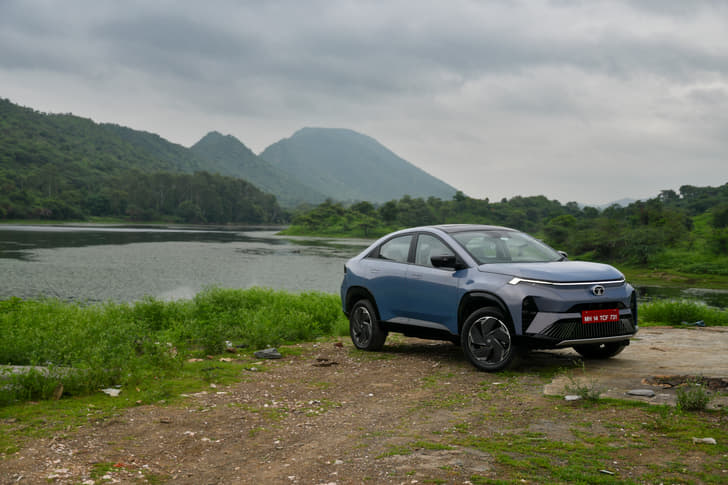
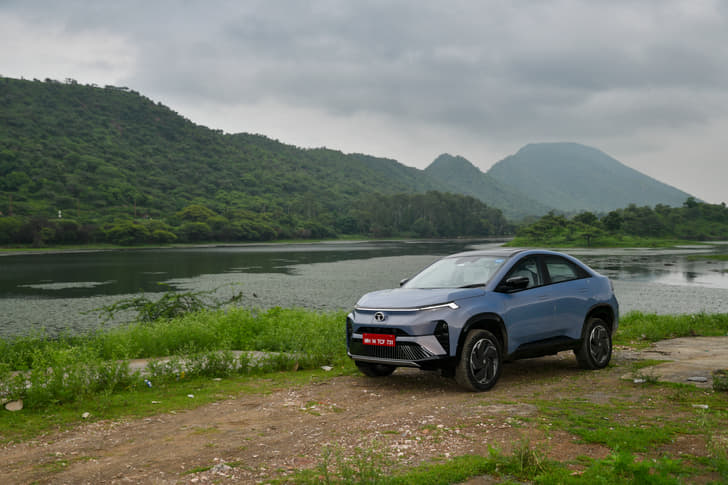
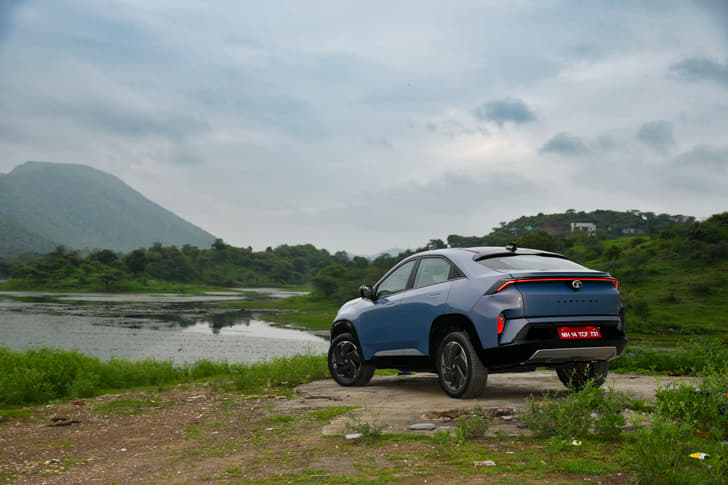
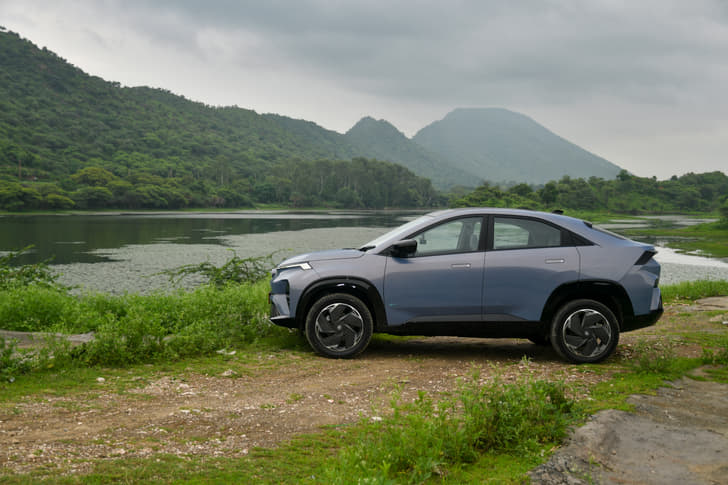
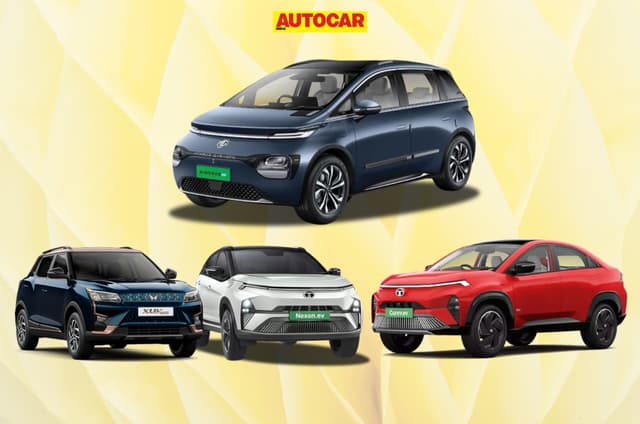
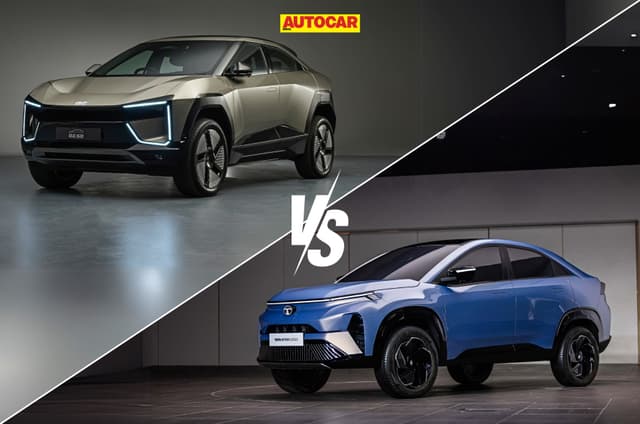
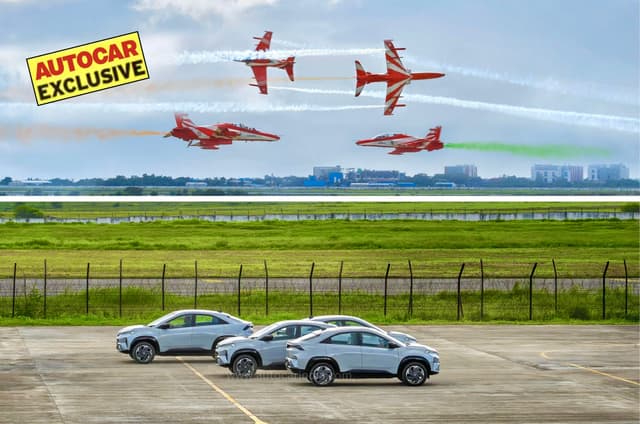
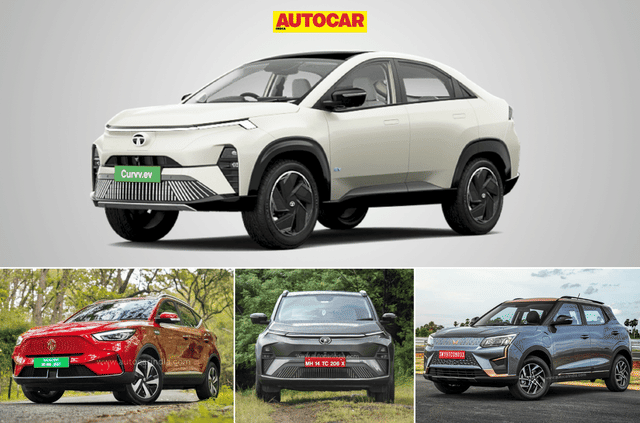
Images of the Tata Curvv EV showcase its distinctive coupe SUV form factor, upright stance, sleek front and rear LED light bars, aero-optimised alloy wheels, etc. Curvv EV interior images showcase the SUV’s tech-laden cabin, panoramic sunroof, large touchscreen and driver’s display, 500-litre boot, and more.
Tata Curvv EV videos
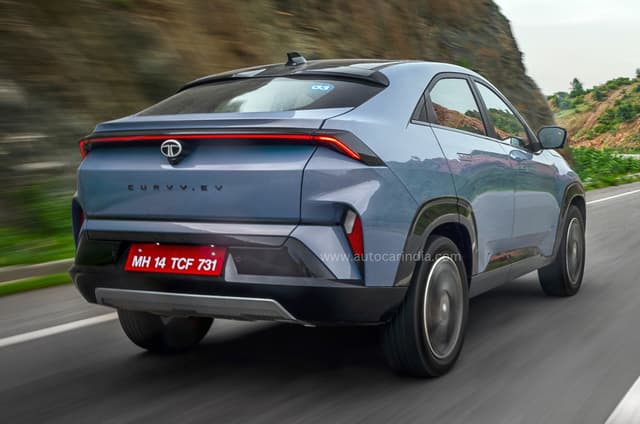
Tata Curvv EV video reviews cover ride comfort, real world range, handling, charging performance, and interior practicality. Watch the Curvv EV SUV video to see how it provides a perfect blend of compact dimensions and premium feel that makes it city-friendly yet versatile for longer drives.
.jpg?w=640&q=75)


.jpg?w=640&q=75)


Tata Curvv EV Colours
Tata offers 5 colours for the Curvv EV, namely Empowered Oxide with Dual Tone, Nitro Crimson with Dual Tone, Pristine White with Dual Tone, Pure Grey with Dual Tone, Virtual Sunrise with Dual Tone. These colours all come with a black roof, so they are dual tone finishes by default. Depending on the variant, the Curvv EV interior finish is either light blue, dark red, or white, with half the colour scheme being comprised of black.
Tata Curvv EV FAQs
The Tata Curvv EV is available with either a 45kWh battery pack or a 55kWh, in seven variants.
The Tata Curvv EV 55's unladen ground clearance is 186mm; the Curvv EV 45's is 190mm.
Its boot space is 500 litres. It also gets a storage area beneath the bonnet which measures 11.6 litres.
The top variant of the Tata Curvv EV is available with five body colour options - Virtual Sunrise, Empowered Oxide, Pure Grey, Flame Red and Pristine White.
The Tata Curvv EV 55's ARAI rated range is 502km; the Curvv EV 45's certified range is 430km.
The Tata Curvv EV top speed is electronically limited to 160kph.
The Tata Curvv EV battery options are 45 kWh and 55 kWh.
Our testing shows that the real world range of the Tata Curvv EV 55kWh is roughly 365km.
The Tata Curvv EV price in India starts from Rs 16.99 lakh (ex-showroom).
Tata launched the Curvv EV in India on 7 August 2024.
Questions you may find useful
I want a new car for my use, considering 40 kms/day in the city. Should I go for Kylaq or Tata Curvv EV, considering new tech and the future of green energy
If you consider new tech and green energy, pick the Tata Curvv EV. With 40 km a day in the city, an EV makes the most sense - you can charge at home once or twice a week, spend far less per km, and enjoy a quiet, smooth drive in traffic. The big question is, do you have a dedicated parking spot with a plug at home or office? If yes, you’re set. You will barely visit public chargers for city use, and the range will easily cover a week of commuting.The Skoda Kylaq is still a sensible pick only if you cannot install home charging or you often do long highway runs. Petrol refuelling is instant, and planning is zero, so it is easier outside the city.One catch with the Curvv EV is its higher upfront price, patchy or busy public chargers on some routes, and a likely poor resale value. However, for your daily city use, though, Curvv EV wins.
Hello Autocar. Thank you for continuing to solve our doubts in such a genuine way. I have a small query. We currently own a 2022 Tata Altroz XZ+ diesel. Since I have to travel about 100km daily, we are planning to upgrade to an EV. However, everyone at home, including me, is attached to the Altroz and is looking for a similar experience. I wanted to ask if an Altroz EV is in the works or if there has been any development on that front. Otherwise, could you suggest whether the Punch EV or the Nexon EV would be better for a family of four?
Pick the Tata Nexon EV. It will feel closest to your Altroz while giving you more range cushion and more room for four. With 100 km daily, that larger battery and stronger AC performance mean less charging stress and easier weekend runs, and the Nexon’s wider rear seat and bigger boot make family life comfier. The Nexon's larger footprint also translates to greater confidence, especially at higher speeds.The Punch EV is a great value and very easy to drive in traffic. If your use is almost all city and parking is tight, the Punch EV can be considered as an option. However, for an Altroz owner used to that solid, grown-up feel, the Nexon EV will feel more familiar.About an Altroz EV, there’s nothing on sale or officially announced for the near term. Tata showed a concept years ago, but the current focus is Punch EV, Curvv EV, Harrier EV and Sierra. If you want an EV now, do not wait.
I want to purchase a car for my daily commute on village roads, as well as for highway driving. My monthly running is around 3,000 km, and once every quarter, I travel to a city that is approximately 350 km away from my town. Considering my usage pattern, would an EV be a suitable choice? Please suggest the best options within a budget of Rs. 20-30 lakh.
If you can install a charger at home and have charging stations on the route to your destination, an EV does make sense for your heavy use. Under Rs. 20 lakh, consider the Tata Curvv EV with the 55kWh battery pack. In our real world tests, it managed 352km on the highway which means your 350km journey is possible with a quick stop in between to top up. It also has good ground clearance and rides well, so it will deal with village roads nicely.For under Rs. 30 lakh, consider the Mahindra XEV 9e with the 79kWh battery pack. In our tests, it managed 488km on the highway meaning with some care, your 350km journey is possible in one go. You will need to charge at your destination though. EVs are less efficient on the highway and particularly with a full load require care to ensure the battery doesn't deplete too quickly. Your charging stops will also need to be planned in advance and there is possibility that you will have to wait at a stop for charge to become available. If this seems like too much work, then stick to a diesel. Under Rs. 20 lakh, consider the Kia Seltos diesel or the Hyundai Creta diesel. Under 30 lakh, you could consider the Mahindra XUV 7XO or the Scorpio N. All of these will comfortably manage village roads and do long highway stints without worries.
I have been owning a Baleno MT petrol for the last 6.5 years. Planning to change the vehicle now. My monthly running is approximately 1,000km (city + highway). I enquired at the market and shortlisted two options: the Creta SX Summer Edition (petrol manual) and the Curvv EV Accomplished X. Both are priced at a difference of just Rs 50,000. Could you please suggest which one to buy?
Go for the Creta SX petrol manual. With your usage pattern, you'll appreciate the Creta's smoothness and stress-free ownership experience, which will feel familiar to your Baleno manual. It has a roomy cabin, it rides well over bad roads, and Hyundai service is everywhere.The Tata Curvv EV will be cheaper to run and nice to drive in the city - quiet, quick and single-pedal friendly. But your highway runs will require some planning for charging stops, and it also isn't as proven as the Creta.One honest catch with the Hyundai Creta is that you will spend more on fuel, and a manual can tire you in heavy traffic. If you are okay with that, the Creta is the safer, easier choice today.
I would like to buy an EV under Rs 20 lakh with a minimum real-world range of 300km, comfortable rear seats for my parents and ease of ownership for the next 6-8 years. I am a huge fan of VAG and Honda cars. Do they have any EV plans for India anytime soon? Among the existing EVs on sale in India, which one should I buy? Thank you, Team Autocar, in advance.
Of the models on sale today, Rs 20 lakh and 300km are an intersection that very few electric cars meet. Your two strongest options are the MG Windsor Pro and the Tata Curvv EV LR, both of which have their pros and cons.The MG Windsor offers a more spacious and airy interior, with soft and plush rear seats and easy ingress and egress, which should be beneficial for your parents. It's also got a very smooth and refined powertrain, although downsides include a slightly firm suspension and the fact that MG's network isn't quite as wide as other brands.The Tata Curvv's swooping roof and high ground clearance mean getting in and out is not as easy, but once you're in the car, space is ample. Quality is not as good as in the MG, and though silent and strong, the powertrain is not as smooth. It has better ride quality and a longer list of features than the MG, though, while it has a wider service network, it doesn't have the best reputation for its after-sales quality. Test drive both, ideally with your parents, and see which one they prefer to sit in the back of.If you can stretch your budget by 2-3 lakh, two even better options are the Hyundai Creta Electric and Kia Carens Clavis EV. Their range is comfortably more than the Windsor Pro or Curvv EV, and they offer far better ride quality and rear seat comfort. The Kia, being an MPV, also offers easier entry and exit for the elderly.While VW-Skoda will eventually bring out EVs for India, likely in 2027, they will be far above this budget, positioned in the Rs 50 lakh plus range. Honda's EV is due to go on sale later this year and will be a rival to the EVs we have highlighted above. If you don't mind waiting, it could be an interesting proposition, though little is known about its specifications or price at this time.
I purchased a VinFast VF6 just 10 days ago. The company and dealer committed a range of 468km on a full charge, but it doesn't even deliver 280km. The dealer is not sharing any phone numbers or email IDs of VinFast representatives. Please advise how I can get this issue addressed. I would also request your channel to raise this issue, as EV companies should not be allowed to make such claims and sell their products to Indian customers.
The first thing to understand is that the 468km figure is the ARAI-certified range, and that number is achieved under standardised test conditions. In the real world, every electric car sold in India delivers significantly less than its claimed ARAI range, depending on speed, driving style, traffic, terrain, air-conditioning use and weather conditions.This is not unique to the VinFast VF6. Models such as the Nexon EV, Curvv EV, Windsor EV and Creta Electric also deliver real-world ranges that are noticeably lower than their official ARAI figures. That said, a real-world range of around 280km does appear lower than expected and is worth investigating.Before concluding that there is a fault, check factors such as average speed, drive mode, AC usage and whether the battery has completed a few charge-discharge cycles. Many EVs show more consistent efficiency after the initial running-in period.As for escalating the issue, insist on a written response from the dealer and ask them to arrange a battery health and diagnostic check. Keep records of all communication. If the dealer is unable or unwilling to provide contact details for the manufacturer, ask for the regional service manager's details and raise the matter through VinFast's official customer support channels.
Hi, I am planning to buy an EV in the 15-17 lakh range. This will be my daily drive to the office, which is approximately 40-50 kms a day. I have driven the Nexon EV, Windsor EV, and the Curvv EV. I haven't driven the VF6 yet, as it is a little over my budget, but it seems a better car in terms of build quality and driving, as per reviews. Should I settle for one of the obvious or splurge a bit for the VinFast?
For a 40-50 km daily city run and a budget of Rs. 15-17 lakh, go with the Nexon EV 45kWh version in a mid trim. It suits your use and budget better than stretching for the Vinfast VF6. You’ll get more than enough range for the week with a healthy buffer; it is easy to drive and park, rides comfortably over bad patches. Also, Tata’s service reach is fairly wide. The Nexon EV has also proven to be a safe car.Do note, the Nexon EV’s cabin does not feel as premium as the VF6. But for office runs, traffic and the odd weekend trip, it works well.If you want a fresher shape and a bit more road presence from your shortlist, the Tata Curvv EV is worth a look.
Hi, I am planning to buy an electric car under a 10 lakh budget. Unable to decide on the car. Mostly for city (Hyderabad) purposes, with daily usage of 10-20 km. Did test drive Punch, Curvv, e-Vitara, Windsor - I thought Punch better, some people are saying Tata service is not good. Kindly help me select an EV car.
For your daily running of 10-20 km in Hyderabad and with a budget of Rs. 10 lakh, you should consider the base Tata Punch EV Smart variant. It suits short city use best because it is small and easy to park, feels smooth at low speeds, and has enough range to do your commute multiple times on one charge. The tall seat gives you a good view out, and the good ground clearance makes dealing with speed breakers and broken patches easy.Meanwhile, the Tata Curvv EV, Maruti Suzuki e-Vitara and MG Windsor are larger and pricier, and will go well past your budget. As for your concerns, Tata's service quality varies by outlet. In Hyderabad, the EV network is among the widest, but pick a dealer with strong Google reviews, choose their bigger workshop, and take an extended warranty to keep peace of mind.Alternatively, you could even consider the MG Comet EV as an urban runabout.
Kindly suggest a good EV for a 100 km daily drive in Delhi. I am considering the e-Vitara, Nexon EV, and BYD Atto 3.
For a daily 100 km run in Delhi traffic and heat, the Tata Nexon EV 45kWh suits your usage best among these three options. It has enough real range to finish the day with plenty left, so jams won’t stress you. It can also be conveniently charged overnight on a home wall box, and Tata’s service and public charger presence is good in NCR.It also feels easy to drive in tight streets, rides bumps well, and is more affordable than the BYD. Two things to note: highway trips still need a bit of planning for fast chargers. If you'd like a bit more range, then consider the Tata Curvv EV, which now only comes in the 55kWh variant.If you want more cabin space, stronger highway performance, and fewer charging stops through the week, then the BYD Atto 3 is the upgrade option, though it comes at a significantly higher price.Overall, for your 100 km daily city use, the Nexon EV 45kWh lines up best.
Hello Sir, could you please share your opinion on the new updated Tata Curvv EV X series? Do you think it is a good buy considering its pricing, features, performance, and overall ownership experience?
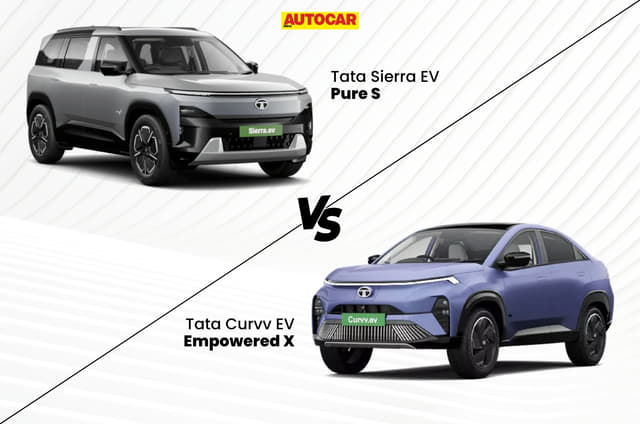
The updated Tata Curvv EV Series X does improve the Curvv EV’s value proposition, but with the Sierra EV’s launch now right around the corner, it makes sense to hold on a little longer before making a decision.The Sierra EV is expected to be priced in a similar ballpark, but it should offer significantly more cabin space and overall practicality, which will make it the more versatile long-term EV. It is also expected to sit higher in Tata’s EV line-up as a more premium offering.